

A First Bra, Without the Awkwardness: A Guide for Growing Up
Key Takeaways
- There is no single right age for a first bra. It comes down to comfort and when a young person feels ready, and that is different for everyone.
- The best first bra is a soft, wireless one. A bralette or a soft crop style is comfortable, easy to wear and easy to get used to.
- A first bra should feel gentle, never tight. It should sit softly without digging in, pinching or leaving marks.
- Choosing a first bra is easier and less awkward when a parent or another trusted adult helps, so nobody has to figure it out alone.
- Breathable, soft fabric matters most at this stage, since comfort and getting used to wearing something new come first.
- There is no pressure and no rush. A first bra is a small, ordinary step, and it is completely fine to take it slowly.
A gentle place to start
Getting a first bra can feel like a big deal, and it can also feel a little awkward, for the young person and sometimes for the parent too. It does not need to be either. A first bra is a small, ordinary part of growing up, and the whole thing gets easier when you treat it that way: calmly, practically, and without any fuss about it.
This guide is written for young people and parents to read together. The aim is simple, to make choosing a first bra comfortable and low-key, so it feels like picking any other everyday item rather than a milestone anyone needs to overthink. There is no single right way to do this and no timeline to keep up with. What matters is comfort and feeling ready, and both of those are personal.
When is the right time?
The honest answer is that there is no fixed age, and anyone who tells you otherwise is guessing. Bodies grow and change at their own pace, and the right time for a first bra is simply when a young person starts to feel they would be more comfortable wearing one. For some that is earlier, for others later, and both are completely normal.
A first bra is often about comfort more than anything else, a soft layer that feels nice under clothes and helps a young person feel at ease as their body changes. If your daughter or the young person in your life mentions wanting one, that is the signal, and it is worth taking gently and matter-of-factly. If they have not mentioned it and you are wondering, a quiet, no-pressure conversation is a kind way to check in. The key is to follow the young person’s lead rather than a calendar.
If a young person is reading this on their own: there is no rush, and there is nothing embarrassing about wanting a first bra or about not wanting one yet. Talking to a parent or another trusted adult is the easiest way to sort it out, because they can help with sizing, choosing and buying, and it means you do not have to work it all out by yourself.
What kind of first bra is most comfortable?
For a first bra, comfort and ease are everything, which points to soft, simple styles. A bralette or a soft crop-style bra is the usual best place to start. These have no wires, a soft stretchy band and a pull-on or easy-fastening design, so they are comfortable, forgiving on fit, and easy to get used to.
Wireless is the way to go at this stage. Wires are not needed for comfort or light support, and a soft, wire-free bra is far easier to wear when you are new to it. Look for soft, breathable fabric, flat seams and a gentle band, the sort of things that make a bra easy to forget you have on. A stretchy style is also practical, because it stays comfortable as a young person grows rather than fitting only one exact size.
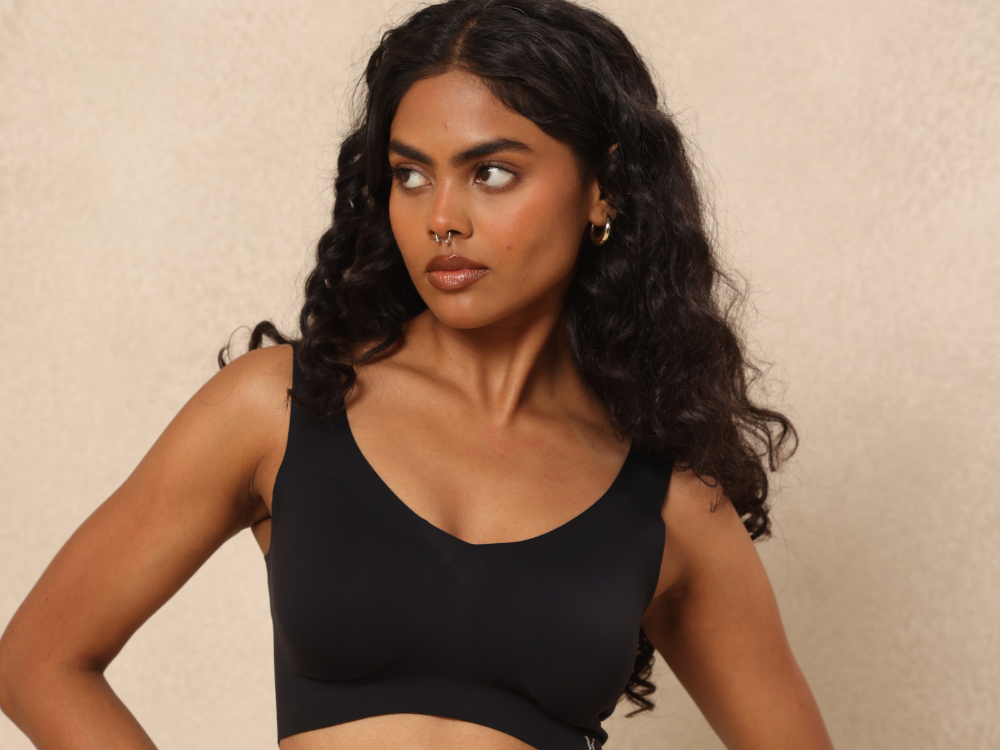
Krvvy’s Ultrasoft Bralette is the kind of soft, wireless style that suits a first bra well, with a gentle band and a seamless, stretchy build. There are plenty of comfortable beginner options across brands like Krvvy, Clovia and Zivame, so it is worth trying a couple to see what feels best. Comfort is the only thing worth optimising for here.
Getting a comfortable fit
Fit for a first bra is refreshingly simple, because the goal is gentle comfort rather than firm support. A first bra should feel soft and secure without being tight anywhere. It should not dig into the shoulders or the ribcage, pinch under the arms, or leave red marks when it comes off. If it does any of those, it is too small or too firm, and a softer or larger option will feel better.
Because bralette-style bras are stretchy, exact sizing matters less than it does for a structured bra, which is part of why they are ideal to begin with. Many come in simple size ranges like small, medium and large rather than band-and-cup numbers, which takes a lot of the guesswork out of it. If you are choosing a numbered style, our guide to measuring at home can help, but for a soft first bra, going by comfort and a simple size range is usually enough.
This is a moment where a parent or trusted adult helping really does make it easier. Having someone to check the fit feels right, help pick between a couple of options and handle the buying takes the pressure off the young person entirely. It should feel like a small, shared, ordinary task, not a test.
For parents: making it easy
If you are the parent, the most useful thing you can do is keep it relaxed. Follow the young person’s lead on timing, keep the conversation low-key and practical, and treat a first bra as the everyday item it is. Comfort comes before everything else, so steer towards soft, wireless styles and let your child have a say in what feels right to them.
Answer questions honestly and simply if they come up, and do not worry if there are not many. Some young people want to talk it through, others just want to get a comfortable bra and move on, and both are fine. Buying a couple to start with, so there is always a clean one while others are in the wash, is practical and takes any fuss out of the routine. Above all, keep any sense of pressure out of it. This is a small step, and the calmer you are about it, the easier it is for them.
Looking after a first bra
Soft bras last longer and stay comfortable with a little care. Hand washing, or a gentle machine cycle in a wash bag with a mild detergent, keeps the fabric soft and the elastic springy. Skip fabric softeners, which can break down stretch over time, and let bras air dry rather than putting them in a hot dryer. Two or three bras in rotation is plenty to start, so there is always a fresh one ready.
That really is all there is to it. A first bra is a soft, comfortable, ordinary thing, and choosing one can be just as low-key. Take it at the young person’s pace, keep comfort at the centre, and let a trusted adult help make it easy.
Frequently asked questions
When should a young person get their first bra? There is no fixed age. The right time is simply when a young person starts to feel they would be more comfortable wearing one, which is different for everyone and completely normal at a range of ages. Following the young person’s own readiness, rather than a set age, is the kindest approach, and a calm chat with a parent or trusted adult is the easiest way to decide.
What type of bra is best for a first bra? A soft, wireless style is best, such as a bralette or a soft crop-style bra. These have a gentle stretchy band, no wires and an easy design, which makes them comfortable and simple to get used to. Breathable, soft fabric matters most, since comfort is the whole point at this stage.
How do I know what size a first bra should be? Because soft bralette-style bras are stretchy, many come in simple sizes like small, medium and large, so you can often choose by comfort rather than exact measurements. If you prefer a numbered style, measuring at home helps, but the main test is that the bra feels gentle and secure without digging in or pinching.
Should a first bra have wires? No. Wires are not needed for a first bra, and a wireless style is far more comfortable and easier to get used to. Soft, wire-free bras give gentle light support, which is all that is needed at this stage.
How many bras does a young person need to start with? Two or three is plenty to begin with, so there is always a clean one while others are being washed. It keeps the routine simple and low-key, and you can add more later once you know which styles feel most comfortable.
How can parents make buying a first bra less awkward? Keep it relaxed and practical, follow the young person’s lead on timing, and treat it as an ordinary everyday item. Let them have a say in what feels comfortable, answer any questions simply, and take the pressure off by handling the sizing and buying together. The calmer and more matter-of-fact it is, the easier it feels for everyone.