

Best Support Bras for a Large Bust That Actually Reduce Back Pain
Key Takeaways
-
Back pain from a large bust is almost always a support problem, not a body problem, and the right bra makes a measurable difference
-
The band does most of the work in a support bra, getting it right is more important than any other single variable
-
Wide straps, a firm band, and adequate cup depth are the three construction details that determine whether a bra actually supports or just covers
-
Underwire is not the only path to support for larger busts, well-constructed wireless bras genuinely hold when the band and cup are built correctly
-
Plus size women have historically had the fewest options in this category, that gap is closing
-
A bra that provides real support should feel noticeably different to the back and shoulders by end of day compared to one that does not
The Back Pain That Nobody Connects to the Bra
For women with larger busts, back pain tends to get attributed to the bust itself rather than to what is, or is not, supporting it. The assumption is that carrying more weight in the chest area inevitably means back discomfort, and that there is not much to be done about it beyond accepting it as the cost of a fuller figure.
That assumption is wrong in most cases. The back pain associated with a large bust is almost always a distribution problem. When a bra does not carry the weight of the bust correctly, the back and shoulder muscles step in to compensate. They are not designed for that sustained load. By mid-afternoon the upper back aches, the shoulders carry tension that builds into the neck, and the lower back curves forward to counterbalance the weight the bra is not managing from below.
The right bra removes that compensatory load from the muscles and distributes it across a wide, stable structural base instead. The back pain does not disappear overnight but it reduces consistently and significantly with every day a correctly fitted, properly supportive bra is worn.
What Support Actually Means for a Large Bust
Support in a bra context means one specific thing: the weight of the bust is carried by the band around the ribcage, not by the straps across the shoulders.
This sounds simple and is frequently misunderstood. Most women with larger busts who experience back and shoulder pain are wearing a bra where the band is doing too little and the straps are doing too much. The straps are tightened to compensate for a loose or stretched band. That tightening transfers the entire bust weight to the shoulders, creating the concentrated pressure on the traps that builds into neck and shoulder pain through the day.
A bra that provides real support for a large bust has three things working together:
A firm, correctly sized band. The band should feel snug around the ribcage on the loosest hook when new. It should stay level across the back without riding up. It should not require the straps to do additional work to keep the bra in position. For larger busts, this means the band needs to be sized correctly, not sized up for comfort. A band that is too large feels easier to put on and immediately starts failing to support.
Wide straps that distribute load across the shoulder. Narrow straps concentrate all the weight they carry at a single point on the shoulder. For larger cup sizes where the straps are doing their correct secondary job of managing shape and preventing forward movement, that concentrated load creates the digging and tension that marks the shoulder by the end of the day. Wide straps spread the same load across more surface area, reducing the pressure at any single point.
Adequate cup depth that fully contains the breast. A cup that is too small pushes breast tissue outward and downward, which changes the weight distribution and increases the forward pull that the back muscles counterbalance. A cup with the right depth holds the breast in its correct position, which reduces the forward load on the back.
Why Wireless Bras Are Worth Reconsidering for Larger Busts
The common assumption is that larger busts need underwire to be properly supported, and that wireless bras are a comfort option for smaller sizes only. This was more accurate a decade ago than it is now.
Well-constructed wireless bras achieve support through band structure and cup depth rather than through wire. The band carries the weight. The cup holds position. When both are built correctly, the result is comparable to a wired bra for everyday support purposes, without the pressure point that underwire creates when it sits against tissue rather than beneath it.
For larger busts specifically, the removal of underwire removes the most common source of mid-chest discomfort that builds through the day. Women who have found that underwire bras become more uncomfortable as the day goes on, particularly in the area where the wire ends meet at the centre or where the side wire sits close to the underarm, are often experiencing correctly fitted bras that simply work better in their position at the start of the day than after hours of movement and tissue shift.
A wireless bra in the correct size removes that variable entirely.
Krvvy's Options for Large Bust Support
Trueform Support Bra: The Wireless Everyday Support Option
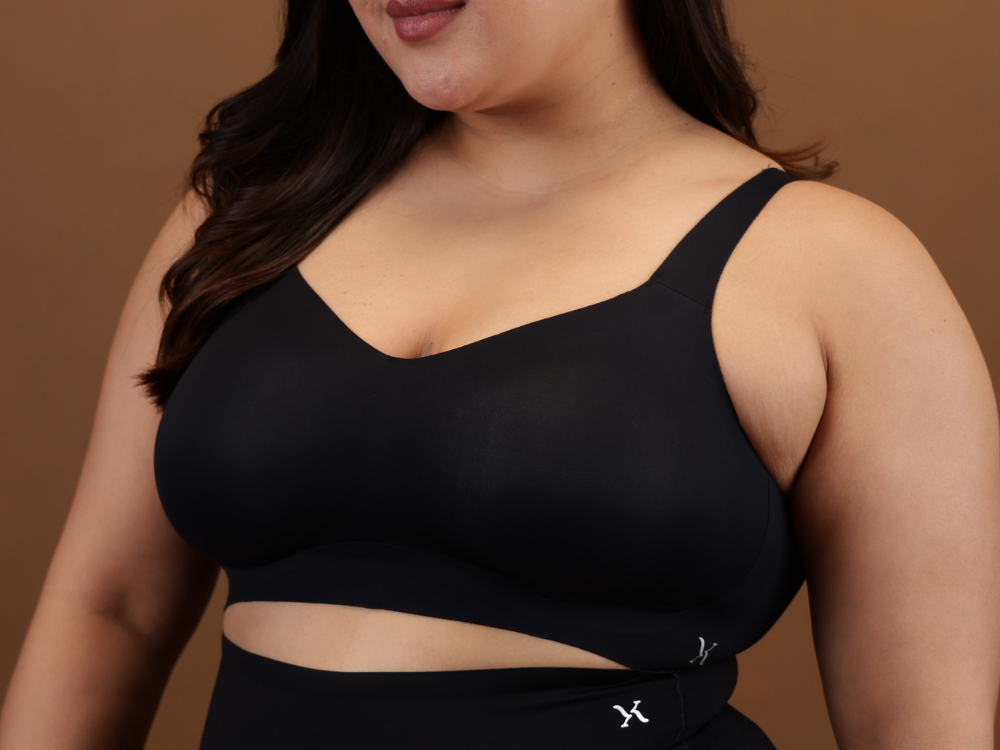
The Trueform Support Bra is built specifically for the gap between a soft bralette and a structured underwired bra. Wireless construction with a band and cup that provides real hold for everyday wear, available in plus sizes where wireless support has historically been hardest to find.
The band construction is the key detail here. It is structured enough to sit firmly around the ribcage and carry the weight of a fuller bust without needing straps to compensate. The cup depth is adequate for larger sizes without the rigid foam moulding that makes some structured bras feel heavy and hot through a long day. The seamless exterior means it sits without edges or pressure points under fitted clothing, which matters for women who spend the day in work tops or fitted shirts.
For back pain specifically, the Trueform's band construction is what makes the practical difference. A band that holds correctly shifts the bust weight off the shoulders and onto the ribcage, which is the structural change that reduces the upper back and neck tension that builds through the day in a poorly supported bra.
Available in Charcoal and Mocha, both neutral enough to work under most everyday clothing without showing through.
Best for: Women in plus sizes who want structured wireless support for everyday wear, particularly those who have found standard underwired bras increasingly uncomfortable but have not found wireless alternatives with enough hold. Women whose back and shoulder pain builds through the day in current bras and who want a wireless option that genuinely holds without straps having to compensate.
Ultrasoft Bralette Plus Size: The Soft Support Option for Fuller Busts
The Ultrasoft Bralette Plus Size is not a heavy support bra. It is the option for days when the body needs coverage and light support without the structure that a full support bra provides, and it is worth being specific about what it does and does not deliver so it gets used correctly.
What it does: soft, seamless coverage with wider straps than a standard bralette that distribute whatever load they carry more evenly across the shoulder. A broader waistband that sits firmly without rolling and provides more base support than a narrow waistband construction. Removable pads for coverage flexibility. The same featherlight fabric as the standard Ultrasoft Bralette in a construction designed specifically for plus size proportions rather than scaled up from a standard size.
What it does not do: replace a structured support bra for high-demand days, sustained activity, or situations where the back needs the full structural support that a firm band carries. For women whose back pain is significant and directly related to bust weight, the Ultrasoft Bralette Plus Size is the rest day and low-key day option alongside the Trueform rather than a replacement for it.
The combination of the two covers the full range of daily support needs. Trueform for structured support on demanding days. Ultrasoft Bralette Plus Size for rest days, home days, and any situation where soft coverage is what the body needs without the structure.
Best for: Rest days, home wear, low-activity days, and lighter outfits where soft coverage is sufficient. Plus size women who want a bralette option that actually accounts for their proportions rather than a standard bralette sized up.
The Fitting Details That Matter Most for Back Pain Reduction
Getting the bra right for back pain is more specific than general bra fitting, because the goal is not just comfort but an active shift in how weight is distributed through the day.
Check the band on the loosest hook. A new bra should fit firmly on the loosest hook so the band can be tightened as the elastic relaxes over time. If a new bra only fits on the tightest hook, the band is too large and will lose all useful tension within weeks. For larger busts, this matters more than for smaller ones because the band is carrying more weight and loses its ability to do so faster when it starts at the wrong tension.
The back should sit level. A band that rides up at the back is a band that has lost or never had the tension it needs. The front of the bra sits low, the back rides up, and the straps take the weight. Level across the back from left to right, parallel to the floor, is the position that indicates the band is doing its job.
Straps should not leave marks. By the end of the day, strap marks on the shoulder indicate that the straps are carrying more weight than they should. In a correctly fitted bra with a band doing its job, strap marks should be minimal to absent. Deep marks that persist after the bra is removed are the physical evidence that the straps are being asked to do what the band is not.
Cup depth check. Standing straight, the cup should contain all breast tissue without any spillage at the top, sides, or front. Tissue sitting outside the cup increases the forward pull that the back muscles counterbalance. A cup that fully contains the breast reduces that pull and reduces the compensatory back tension with it.
Other Habits That Help Alongside the Right Bra
A correctly fitted support bra makes a significant difference to back pain associated with a large bust. A few other habits that compound the improvement:
Remeasure every year or after any significant body change. Band size and cup size both shift with weight change, hormonal shifts, and age. A bra that fitted correctly eighteen months ago may now be providing less support than it appears to because the measurements have changed and the bra has not.
Rotate between two to three bras rather than wearing the same one daily. Elastic needs recovery time between wears. A bra worn daily without rotation loses its tension faster and starts providing less support sooner than one that rests between uses.
Check posture awareness through the day. A well-fitted support bra prompts better posture by reducing the forward pull that causes the back to round. Noticing when the back is rounding and gently correcting it builds the postural habit that reduces back tension even beyond what the bra alone achieves.
FAQs
Can the right bra actually reduce back pain from a large bust?
Yes, significantly in most cases. The back pain associated with a large bust is almost always caused by insufficient support transferring weight to the shoulders and back muscles rather than the band. A correctly fitted bra with adequate band support shifts that weight to the ribcage, reducing the muscular compensation that causes the pain.
Is underwire necessary for large bust support?
Not anymore. Well-constructed wireless bras with firm bands and adequate cup depth provide comparable everyday support to underwired bras without the pressure point concerns. The Trueform Support Bra is specifically built for this, with enough band and cup structure to support larger busts without wire.
How do I know if my current bra is contributing to my back pain?
The clearest signs: back and shoulder pain that builds through the day and eases after removing the bra, strap marks that are deep and persist on the shoulder after the bra comes off, a band that sits higher at the back than the front, and straps that need tightening constantly. Any combination of these indicates the bra is not providing the support it should.
What is the difference between the Trueform Support Bra and the Ultrasoft Bralette Plus Size for back pain?
The Trueform Support Bra is a structured wireless bra designed for everyday hold that actively shifts bust weight to the band and away from the shoulders and back. The Ultrasoft Bralette Plus Size provides soft coverage with wider straps and a broader waistband, suitable for rest days and lower demand situations. For back pain specifically, the Trueform is the functional support option and the Ultrasoft Bralette Plus Size is the comfort complement for lighter days.
Should I size up in the band for more comfort if my back hurts?
No. Sizing up in the band reduces the tension that provides support, which makes the straps compensate more, which increases shoulder and upper back tension. The counter-intuitive answer is that a correctly sized or even slightly snugger band reduces back pain faster than a loose one, because the band can finally do the structural work the body needs it to do.