

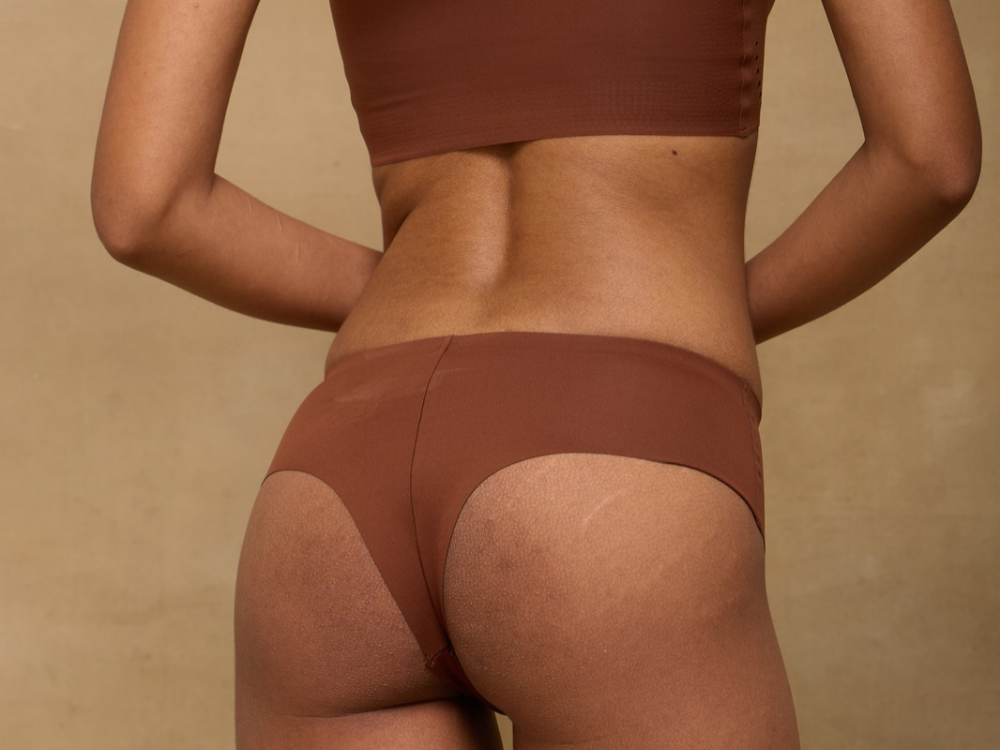
Everything You Actually Need to Know About Thongs
Reviewed by Dhriti ChopraBrand Manager, KrvvyKey Takeaways
- Thongs are not uncomfortable by default, most discomfort comes from the wrong size or the wrong fabric
- They solve one specific problem better than any other underwear style: rear panty lines under fitted clothing
- Hygiene concerns around thongs are largely overstated when the right fabric and care habits are in place
- A thong in the wrong size is genuinely uncomfortable, a thong in the correct size is barely noticeable
- They are not for every outfit or every person, knowing when they work and when they do not makes them useful rather than a wardrobe obligation
- Krvvy's No Show Mid Rise Thongs are built around the invisibility and everyday comfort that make a thong actually practical
The Most Misunderstood Underwear Style
Thongs sit at two extremes of the opinion spectrum. Women who wear them swear they are the most comfortable option they own and cannot understand why anyone would wear anything else. Women who have tried them once describe them as unwearable and never went back.
Both responses are almost always about fit rather than style. A thong in the wrong size is legitimately uncomfortable. The waistband cuts in, the back strip moves constantly, and there is sustained awareness of the underwear that makes it impossible to forget you are wearing it. A thong in the correct size in a soft, stretchy fabric sits without moving, without pressure, and without any of the discomfort that gives the style its bad reputation among women who tried it once and wrote it off.
This guide covers what thongs actually do, how to wear them correctly, and when they make sense as part of a practical underwear rotation.
What a Thong Actually Does
A thong eliminates rear panty lines by removing the rear fabric that creates them. There is no panel sitting across the seat, no leg opening crossing the bottom, no seam running through the area that shows under fitted clothing. Under a bodycon dress, tight trousers, or bias-cut fabric, the back of the outfit sits over skin rather than over a fabric edge.
This is the thong's core function and it does it better than any other underwear style. For rear line visibility specifically, nothing competes with the absence of rear fabric. A seamless bikini with laser-cut edges comes close but a correctly fitted thong in a smooth fabric is still the cleaner result under the most unforgiving fabrics.
Everything else about a thong, the comfort, the hygiene, the suitability for different bodies and outfits, is secondary to this core function. If rear panty lines are not a concern for a specific outfit, a thong may not be the most practical choice for that day regardless of personal preference.
The Fit Question: Why Size Matters More Here Than With Any Other Style
With most underwear styles, being slightly off in size means minor adjustments through the day. With a thong, being slightly off in size means consistent discomfort because the construction has nowhere to absorb the error.
Too small: The waistband cuts into the hip and waist. The back strip sits under tension rather than lying naturally, which causes friction and movement. The front triangle pulls downward. The overall experience is of underwear that is fighting the body rather than sitting with it.
Too large: The waistband rolls or slides. The back strip shifts position during movement. Nothing stays where it was when it was put on.
Correct size: The waistband sits flat at the hip without cutting in or gaping. The back strip lies naturally without pulling or shifting during movement. The front triangle covers without pulling. The overall experience, particularly after the first few minutes of wearing, is of almost nothing being there at all.
This is why trying a thong once in a random size and deciding the style does not work is not a reliable test. The size has to be right for the style to be assessed fairly.
Krvvy's No Show Mid Rise Thongs are sized with this in mind. The mid-rise waistband sits below most trouser and skirt waistbands without appearing above them, and the seamless construction means no raised edges anywhere on the garment. In the correct size, they sit without moving and without requiring adjustment through a full day of wear.
The Hygiene Question: What Is Actually True
The concern that thongs are less hygienic than other underwear styles is one of the most persistent myths in innerwear conversations. The reality is more nuanced than either the alarmed or dismissive versions of the debate suggest.
The specific concern is that the narrow back strip, sitting between the body, can transfer bacteria from the rear to the front during movement. In theory this is possible. In practice, the risk is significantly overstated for most women who wear the correct size in breathable fabric and change their underwear daily.
The variables that actually matter for hygiene with any underwear style, including thongs:
Fabric. A cotton gusset, regardless of what the rest of the thong is made from, places natural breathable fibre against the most sensitive skin. All Krvvy underwear styles including the thongs have a cotton gusset for exactly this reason. Synthetic fabric against the skin all day in a warm environment creates the conditions for bacterial growth regardless of underwear style. Natural fibre at the contact point does not.
Fit. Thongs that are too tight create friction and warmth in exactly the area where hygiene matters most. A correctly fitted thong in breathable fabric does not create those conditions.
Changing frequency. Daily changing of any underwear style is the baseline hygiene practice that matters most. A fresh pair daily removes the bacterial load that accumulates through wear regardless of style.
Washing. Washing with a dedicated undergarment wash like Ugees rather than standard detergent removes bacteria more effectively and preserves the cotton gusset's natural properties through repeated washing. Standard detergent leaves residue that reduces breathability over time.
For women with recurrent UTIs or known sensitivity, cotton gusset construction and breathable fabric are the relevant variables, and both are present in Krvvy's thong construction. Switching to a full-coverage style is always an option, but the style alone is not the hygiene risk it is often described as.
When Thongs Make Sense
Under bodycon dresses and skirts: The clearest use case. A bodycon silhouette in any fabric will show rear underwear lines from any other style. A thong removes them entirely.
Under bias-cut or satin fabric: These fabrics pick up every texture and edge. A thong in a smooth seamless construction is the most reliable solution for rear invisibility under the most unforgiving fabrics.
Under fitted formal trousers: The seat area of fitted trousers in structured fabric shows the rear panel of any coverage underwear as a visible ridge. A thong removes the ridge while keeping coverage at the front and waist where the trouser waistband provides its own cover.
Under leggings and active wear: For women who find underwear lines visible under fitted active wear, a thong removes the rear lines that seamless briefs and boyshorts sometimes still create under very tight stretch fabric.
When Thongs Do Not Make Sense
For high intensity activity involving sustained running or jumping: The back strip can shift during high-impact movement in a way that is more noticeable than with full-coverage styles. For sustained cardio, a seamless sports brief or boyshort stays in position more reliably.
On very bloated or sensitive days: The waistband that fits correctly at baseline can feel tight and irritating on days when the body is larger or more sensitive. On these days, a wider waistband in a fuller coverage style accommodates the body's current state more comfortably.
For overnight wear: The back strip creates friction during sleep position changes in a way that full coverage styles do not. Soft full coverage underwear is more practical for overnight wear.
When the outfit does not create a rear line problem: Under a loose dress, a flowy skirt, or anything where rear lines are not visible, a thong has no functional advantage over a more comfortable coverage style. The tool should match the problem.
Building Thongs Into a Practical Rotation
Thongs work best as part of a rotation rather than as the default for every day and every outfit. A practical split for most women:
Two to three pairs of thongs for the specific outfit situations where rear lines are the concern. The No Show Mid Rise Thongs in a shade matched to the skin tone for maximum invisibility under light or fitted clothing.
Two to three pairs of seamless hipsters or boyshorts for everyday wear, active days, and outfits where rear lines are not a visibility concern.
This covers every outfit situation without either style having to do all the work or being worn in situations where it is not the best choice.
FAQs
Why are thongs uncomfortable?
Almost always a size issue. A thong in the correct size in soft seamless fabric sits without pressure or movement. If the waistband is cutting in, the back strip is shifting, or there is consistent awareness of the underwear, the size is off. Try one size up before deciding the style does not work.
Are thongs bad for you?
Not in any meaningful way when worn in the correct size in breathable fabric with a cotton gusset. The hygiene concerns are largely overstated. Standard hygiene habits, daily changing, proper washing, cotton gusset construction, apply to all underwear styles and address the relevant risks equally.
Do thongs show under leggings?
The waistband can show above low-rise leggings if the thong's rise is higher than the legging waistband. The No Show Mid Rise Thongs sit below most standard legging waistbands. The back strip does not show through leggings because there is no rear panel for the fabric to pick up.
What is the best thong for everyday wear?
Seamless construction, cotton gusset, mid-rise waistband that sits below everyday clothing waistbands, and a shade close to the skin tone for maximum invisibility under light fabrics. The No Show Mid Rise Thongs cover all of these for everyday practical wear.
Can I wear a thong during my period?
With a pad, yes. With a tampon or menstrual cup, yes. Thongs are not compatible with most pad styles because the narrow back strip does not hold a pad in position. Switching to a fuller coverage style on period days when using pads is the practical approach.