


Saree Shapewear vs Dress Shapewear: One Size Doesn't Fit All Occasions
Key Takeaways
-
Shapewear needs change entirely depending on whether you are wearing a saree or a dress
-
Saree shapewear has to work under a petticoat, manage midriff smoothness, and stay in place through draping
-
Dress shapewear prioritises seamless edges, coverage zones, and silhouette continuity under fitted fabric
-
The wrong shapewear for the occasion creates more problems than wearing none at all
-
Coverage zone and waistband placement are the two variables that matter most across both occasions
-
One well-chosen piece for each occasion beats a drawer full of shapewear that works for neither
Why the Occasion Changes Everything
Shapewear is not a single solution worn across all situations. The outfit it goes under determines almost everything about what the shapewear needs to do, where it needs to sit, and what kind of construction will actually hold through the occasion.
A saree and a fitted dress are about as different as two outfits can be. One involves multiple layers, a petticoat, fabric draped and tucked around the body, and a midriff that is partially or fully exposed. The other involves a single layer of fabric sitting directly over the shapewear with nothing in between. The shapewear that works beautifully under one will actively cause problems under the other.
Understanding what each occasion actually demands makes the choice straightforward.
What a Saree Actually Requires From Shapewear
Wearing a saree involves layers that most other outfits do not. A blouse sits at the top. A petticoat ties at the waist and falls to the floor. The saree fabric drapes over both, with pleats tucked into the petticoat at the front and the pallu thrown over the shoulder. The shapewear has to function within all of that.
The midriff is exposed: In most saree draping styles, the midriff between the blouse hem and the saree fabric is visible. Shapewear that sits too high will show above the saree drape. Shapewear that sits too low will not smooth the midriff at all. The waistband placement has to be precise.
The petticoat adds bulk: A petticoat tied at the natural waist adds a layer of fabric that can create a visible thickness at the waist and hips. Shapewear worn under the petticoat smooths this, but the shapewear itself must not add additional bulk or the layers compound the problem.
Pleats need to fall cleanly: The front pleats of a saree fall from the waist downward and need a smooth, flat surface to drape against. Shapewear with rolling edges, visible seams, or any bunching at the hip disrupts how the pleats fall and sit.
The occasion is usually long: Weddings, pujas, family functions. A shapewear piece for saree wear needs to be comfortable enough to sit, stand, eat, and move in for several hours without rolling, shifting, or requiring adjustment.
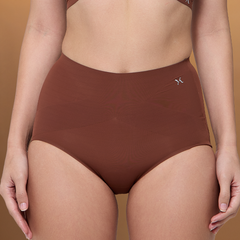
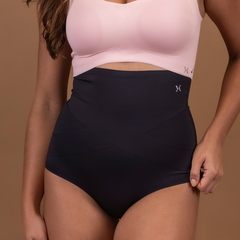
What works: A high-waist shaping brief that sits at the natural waist, has a wide flat waistband that does not roll, and extends to the upper thigh. Light to medium compression only, because the petticoat and saree fabric already manage some of the silhouette. The Krvvy All Day Control Shaper works well here because the waistband is wide enough to sit stably under a tied petticoat and the compression is calibrated for extended wear rather than maximum cinching.
What does not work: Full body shapers or bodysuits under a saree. The construction conflicts with the blouse and the petticoat tie, and there is no practical way to manage the layers together. Anything with lace or textured edges at the waistband will show through the petticoat fabric and disrupt the drape.
What a Dress Actually Requires From Shapewear
A fitted dress sits directly over the shapewear. There is no petticoat, no drape, no additional layer to absorb imperfections. Every edge, every seam, and every compression line in the shapewear has a direct path to visibility.
This makes dress shapewear primarily a construction question. The shapewear has to be seamless enough to disappear under fabric, the edges have to be laser-cut or bonded so they do not create ridges, and the coverage has to extend far enough that the transition from shapewear to skin happens below the hemline.
Silhouette continuity matters: Under a bodycon dress or a fitted midi, the shapewear needs to create a single, uninterrupted smooth line from waist to thigh. Any gap in coverage, any rolling at the waistband, or any edge at the thigh that sits within the dress silhouette will show.
Fabric weight changes the requirement: Under heavy fabric like structured crepe or thick jersey, minor shapewear imperfections are absorbed. Under thin fabric like chiffon, silk, or lightweight polyester, every texture and edge is visible. The thinner the dress fabric, the more seamless the shapewear needs to be.
The neckline affects the top edge: A low-back dress, a deep V, or a backless silhouette limits how high the shapewear can sit. A standard high-waist brief is fine under most dresses. For low-back or backless styles, the shapewear needs to sit low enough at the back that it does not appear at the neckline.
The hemline affects the bottom edge: The thigh opening of the shapewear must sit below any slit or above the knee in the dress. If the dress has a high slit, shaping shorts that extend further down the thigh push the edge below the visible zone.
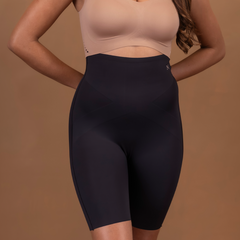
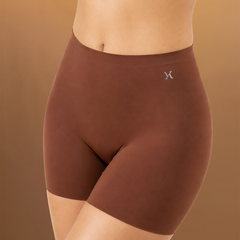
What works: Seamless shaping shorts or a high-waist shaping brief with laser-cut edges for most fitted dresses. For occasion dresses where full smoothness from bust to thigh is needed, a shaping bodysuit that removes the need for a separate bra entirely. The All Day Control Shaper works under most fitted dresses because the edges are smooth and the compression is even enough to avoid visible texture under fabric.
What does not work: Shapewear with lace trim, sewn edges, or decorative detailing at the waist or thigh. Any of these create visible lines under fitted fabric regardless of how well the rest of the garment fits.
The Overlap: What Both Occasions Share
Despite their differences, saree and dress shapewear share two non-negotiable requirements.
The waistband must not roll. Under a saree, a rolling waistband disrupts the petticoat tie and the drape. Under a dress, it creates a visible ridge at the waist. In both cases, a wide, reinforced waistband that grips at the natural waist without digging is the baseline construction requirement.
Comfort over duration is not optional. Both saree occasions and dress occasions tend to run long. Shapewear that starts the evening feeling fine but becomes restrictive after two hours is shapewear in the wrong size or at the wrong compression level. The correct piece should feel the same at hour six as it did at hour one.
A Quick Reference by Outfit
Saree: Shaping brief, light to medium compression, wide flat waistband, worn under the petticoat. No bodysuit or full-body shaper.
Fitted bodycon dress: Seamless shaping shorts or high-waist brief, laser-cut edges, medium compression, thigh opening below any dress slit.
Midi or maxi dress: High-waist shaping brief is usually enough. Coverage to the upper thigh, seamless edges, nude shade close to skin tone.
Backless or low-back dress: Low-back shaping brief or adhesive solutions for the bust. Standard high-waist shapewear will show at the back neckline.
Lehenga: Similar to saree requirements. Shapewear sits under the skirt layer, so edge visibility is less critical than waistband stability and midriff smoothness under the blouse.
FAQs
Can I wear the same shapewear under a saree and a dress?
Sometimes, but not always. A seamless high-waist brief with a flat waistband can work for both. The problem arises with full-body shapers or bodysuits, which conflict with saree blouse and petticoat construction. If you want one piece for both occasions, a high-waist shaping brief in light to medium compression is the most versatile option.
Should shapewear go under or over the petticoat?
Under the petticoat. Shapewear worn over the petticoat adds a visible layer between the petticoat and the saree drape, which creates bulk and disrupts the fall of the pleats.
Why does my shapewear show under my dress even though it fits?
Almost always an edge construction issue rather than a size issue. Sewn or lace edges create ridges that show through fitted fabric regardless of how well the garment fits. Switch to a style with laser-cut or bonded edges and the visibility usually disappears.
How do I keep shapewear from rolling during a long occasion?
Waistband width and size accuracy are the two variables. A wide reinforced waistband that sits at the natural waist does not roll. If the waistband is narrow or the size is slightly off, rolling is inevitable regardless of how many times you adjust it through the evening.
Is shapewear practical for destination weddings in warm weather?
Yes, if the fabric is right. A lightweight polyamide-elastane blend in light compression is manageable even in warm outdoor conditions. Heavy compression in non-breathable fabric is not. Prioritise moisture-wicking fabric and keep the compression level moderate for warm-weather occasions.