

The Curvy Girl's Guide to Shapewear That Actually Feels Good
Key Takeaways
-
Shapewear for curvy bodies is not about minimising or hiding, it is about enhancing what is already there
-
The right shapewear lifts, defines, and holds in a way that works with your curves, not against them
-
Compression level and coverage zone matter more than size alone
-
A well-fitted shapewear piece should feel like a second skin, not a restriction
-
Curvy bodies need specific construction details that standard shapewear does not always deliver
-
The goal is to walk out feeling more like yourself, not less
Shapewear Was Not Always Designed With You in Mind
For a long time, shapewear was designed for one body type and then scaled up for everyone else. The result was shapewear that compressed in the wrong places, rolled at the waist, cut into the thighs, and created the kind of uncomfortable bulge at the edges that defeated the purpose entirely.
That has changed, but not uniformly. There is still a significant difference between shapewear that is genuinely designed for curvy bodies and shapewear that is simply made in larger sizes. Knowing what to look for is the difference between a piece that enhances your silhouette and one that spends the evening rolling down.
This guide is about the former.
What Shapewear Should Actually Do for a Curvy Body
The framing matters here. Shapewear for curvy bodies is not about flattening or minimising. It is about definition. A waist that sits more distinctly. A hip line that is smooth and clean under fabric. A silhouette that reads as intentional rather than incidental.
The best shapewear for curvy bodies does three things:
Lifts: The seat and bust should feel supported and held upward, not compressed downward. Good shapewear for curvy figures has targeted lift panels that work with the natural shape rather than pushing against it.
Defines: The waist area should feel cinched without being constricted. The goal is an hourglass definition that enhances the natural waist-to-hip ratio, not a uniform compression that flattens the whole midsection.
Smooths: The transition between the shapewear edge and the natural body should be invisible. No ridge, no roll, no visible boundary under fabric. This is a construction detail, not a size detail, and it matters more for curvy bodies because there is more shape for the edge to cut across.
The Construction Details That Actually Matter
When shopping shapewear as a curvy woman, the label size is almost secondary to these specific construction features:
Wide, reinforced waistband: A narrow waistband on a fuller body will roll. A wide, structured waistband that sits firmly at the natural waist without digging is the single most important construction detail in shapewear for curvy figures. It should grip, not cut.
Targeted compression zones: Shapewear with uniform compression across the entire garment flattens rather than defines. Look for pieces with higher compression at the waist and lighter compression at the hips and thighs, which enhances the waist-to-hip differential rather than erasing it.
Bonded or laser-cut edges at the thigh: The leg opening is where shapewear most commonly fails curvy bodies. A sewn edge cuts into the thigh and creates a visible ridge under dresses. Bonded or laser-cut edges lie flat and transition smoothly, which is non-negotiable for fitted outfits.
Fabric with high elastane content: A higher elastane percentage means better stretch recovery and a fabric that moves with the body rather than resisting it. For curvy bodies with more surface area for the fabric to cover, stretch recovery keeps the garment sitting correctly through a full day of movement.
Gusset construction: A well-constructed gusset in the seat area prevents the fabric from pulling downward as you move. Without it, shapewear rides down at the back and loses its lift effect within an hour.
Compression Level: Getting This Right Changes Everything
One of the most common mistakes curvy women make with shapewear is going for maximum compression, assuming more compression means more hold and more definition.
It does not. Maximum compression on a curvy body creates pressure points, restricts movement, and pushes volume upward or downward rather than smoothing it. The result is visible bulge above the waistband or below the thigh opening, which is the opposite of the intended effect.
Light to medium compression is the right starting point for most curvy women in most situations. It holds and defines without restricting, allows natural movement, and distributes compression evenly enough that there are no pressure hotspots.
Heavy compression is appropriate for specific occasion wear where the outfit demands a very smooth silhouette and the wearing time is limited. It is not a daily solution.
The test: put it on and sit down. If you cannot sit comfortably, the compression is too high or the size is too small. Shapewear that works is shapewear you can move in.
Coverage Zones: Matching the Piece to the Outfit
Curvy bodies tend to have more specific coverage needs because the silhouette is fuller across more zones. A piece that handles the waist but leaves the hips and thighs unsmoothed creates an inconsistent effect under fitted clothing.
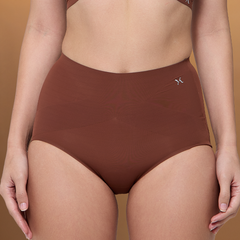
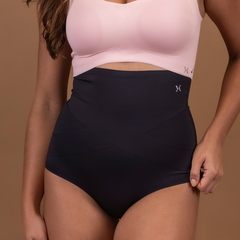
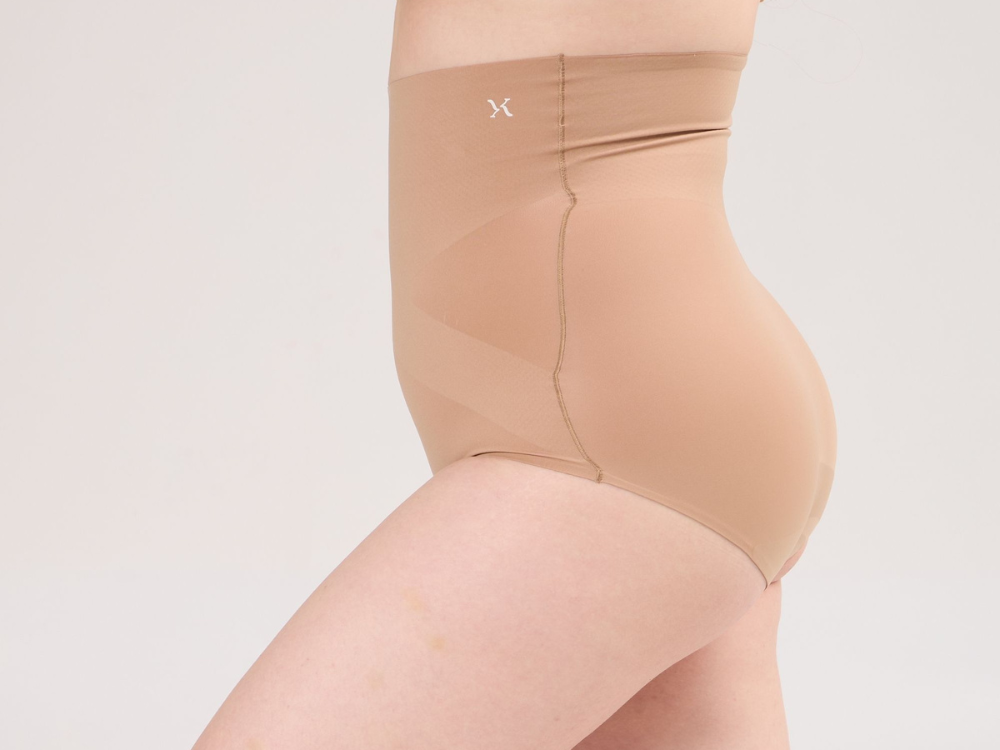
High-waist briefs: Cover from the natural waist to the upper thigh. Good for dresses and skirts where the focus is waist definition and hip smoothing. The most versatile shapewear piece for curvy figures.
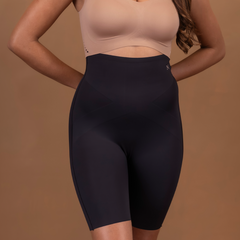
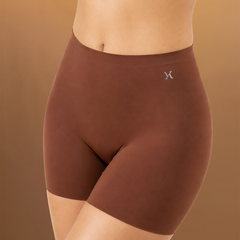
Shaping shorts: Cover from the waist to mid-thigh. Better for fitted trousers and midi dresses where thigh smoothing matters as much as waist definition. The longer leg prevents the thigh edge from showing under fabric.
Full body shapers: Cover from bust to thigh in a single piece. Best for fitted occasion wear where a completely smooth silhouette from top to bottom is the goal. Removes the need for a separate bra and eliminates any gap between pieces.
Waist cinchers: Cover only the midsection. Work well as an add-on layer for curvy bodies who want extra waist definition without additional compression at the hips and thighs.
The Krvvy All Day Control Shaper is designed with a curvy fit in mind. The compression is calibrated for all-day comfort rather than maximum cinching, the waistband is wide enough to sit without rolling, and the coverage extends far enough down the thigh to prevent edge visibility under fitted dresses and trousers. For curvy women who have found standard shapewear either too tight or too short in the body, it is worth trying as a baseline.
What to Avoid
A few specific things that do not work well for curvy bodies, regardless of how they are marketed:
Shapewear that does not extend past the hip: A waist-only piece on a curvy body creates a defined waist with unsmoothed hips immediately below, which emphasises the size difference rather than creating a smooth line.
Very high compression in thin fabric: High compression in a thin fabric means the fabric stretches to its limit, which reduces its ability to smooth and increases the likelihood of visible texture and rolling.
Shapewear sized by standard clothing size alone: Shapewear sizing runs differently from clothing sizing. Always measure your waist and hip circumference and check against the brand's specific size chart. A standard size 14 in clothing does not automatically correspond to a size L in shapewear.
Styles with decorative lace at the thigh opening: Looks good on the hanger, creates a visible ridge under any fitted fabric. Laser-cut edges only for anything worn under clothing.
FAQs
Should curvy women size up in shapewear?
No, sizing up reduces compression to the point where the garment may not hold. The right approach is to measure accurately and find a size that fits the largest measurement, whether that is the waist or the hip, and check the compression level from there.
Why does my shapewear roll down at the waist?
Almost always a waistband construction issue or a size issue. A narrow waistband on a fuller waist will roll regardless of size. Look for wide, reinforced waistbands specifically. If the waistband is wide and still rolling, go up one size.
Can I wear shapewear with a kurta or saree?
Yes, and it works particularly well. A high-waist shaping brief under a saree smooths the midriff and prevents the petticoat from adding bulk. Under a fitted kurta, shaping shorts smooth the silhouette without adding visible layers.
Is shapewear suitable for curvy women in Indian summers?
Choose breathable polyamide-elastane blends rather than heavy compression fabrics. Lighter compression in a moisture-wicking fabric is significantly more comfortable in warm weather and performs better over a long day than heavy compression in a non-breathable fabric.
How do I prevent visible shapewear edges under dresses?
Laser-cut or bonded edges only. Make sure the thigh opening of the shapewear sits below the hemline of any visible slit or high cut in the dress. If the edge is still showing, shaping shorts with a longer leg will push the edge further down and out of the visible zone.