


The First Innerwear Guide for Teenage Girls: What to Buy, What to Expect, and How to Find the Right Fit
Key Takeaways
-
Breast development is gradual and the innerwear needed changes with it, there is no single right answer for every age or stage
-
The first bra does not need to be a structured or wired bra, soft and simple is almost always the right starting point
-
Fit matters more than size at every stage, and getting it right early builds habits that serve girls well into adulthood
-
Cotton and soft seamless fabrics are the most comfortable and practical choices for teenage innerwear
-
The conversation around innerwear does not need to be awkward, practical and matter of fact works better for most teenagers
-
Buying ahead of where development currently is leads to poor fit, buying exactly where it is leads to comfort
Why This Guide Exists
Most parents navigate their daughter's first innerwear purchases without much guidance. The options in stores are either too childish or jump straight to adult styles with underwire and padding that a teenager does not yet need. The sizing is confusing. The conversation around it can feel awkward on both sides.
This guide is written for parents who want to get it right without overcomplicating it. What to look for at each stage of development, which fabrics and styles actually work for teenage bodies, how to have the conversation in a way that feels normal rather than mortifying, and how to build a small, practical innerwear rotation that grows with your daughter.
Understanding the Stages of Development
Breast development does not happen overnight and it does not follow a fixed timeline. The age at which it begins and the pace at which it progresses varies significantly between individuals. Starting earlier or later than peers is normal and does not indicate anything about where development will ultimately land.
Development generally moves through recognisable stages, from the initial breast bud stage where a small amount of tissue develops beneath the nipple, through gradual growth over several years, to a more settled adult size usually by the mid to late teens. The innerwear needed at each stage is different, and what works at eleven will likely need revisiting at thirteen and again at fifteen.
The practical approach is to buy for where your daughter is now, not where you expect her to be. Innerwear that is too large does not provide the comfort or support that is the whole point of wearing it. Buying for the current stage and revisiting every six to twelve months as development progresses is more useful than trying to anticipate ahead.
The First Bra: What It Should and Should Not Be
The first bra does not need to do much. At the early stages of development, the primary needs are comfort, coverage, and the feeling of being appropriately dressed rather than structural support.
What works at the beginning:
Soft crop tops or training bras in cotton or a soft cotton blend. These sit flat against the body without cups, underwire, or padding, and provide enough coverage to make a young girl feel comfortable without adding structure she does not yet need. They are also easy to wear and wash, which matters practically at this age.
Seamless soft bralettes are a natural next step as development progresses. They provide slightly more coverage and a more defined shape than a crop top without the weight or rigidity of an adult bra. The Krvvy Ultrasoft Bralette works well at this stage for girls who have moved past the initial crop top phase and want something that feels more like a proper bra without underwire or heavy structure.
What to avoid at the beginning:
Underwired bras before development is sufficiently advanced to need them. Underwire is designed to sit beneath a developed breast in the inframammary fold, and on a breast that has not yet developed to that point it simply sits against tissue it was not designed for, which is uncomfortable and serves no purpose.
Heavily padded bras at early stages. Padding at this age tends to come from social pressure around appearance rather than from any practical need, and it creates an inaccurate sense of size that makes actual sizing harder as development progresses.
Fabric: What Teenage Skin Actually Needs
Teenage skin tends to be more sensitive than adult skin, and the hormonal changes driving breast development also affect how the body responds to fabric against the skin.
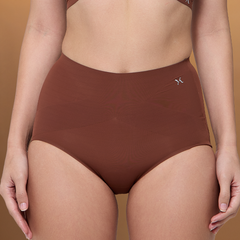
Cotton is the most straightforward choice for teenage innerwear. It is soft, breathable, easy to wash, and unlikely to cause irritation. The Krvvy Organic Mid Rise Cotton Hipster sit well against sensitive skin through a full school day without the moisture retention or heat build-up. Soft seamless fabrics in polyamide blends are a good second option, particularly for girls who find cotton underwear too thick under school uniforms or fitted clothing. Seamless construction removes the raised seam edges that can show through thin fabric and cause friction during the active day a teenager has.
What to avoid: lace trim against the skin at this age, stiff synthetic fabrics, and anything with heavy elastic that digs into skin that is still developing.
Sizing: How to Get It Right Without Making It Complicated
Teenage bra sizing works exactly the same way adult sizing does. The band measurement is taken around the ribcage just below the bust and rounded to the nearest even number. The cup size is the difference between the bust measurement and the band measurement.
The challenge at this age is that development is active rather than settled, which means the size changes more frequently than it will in adulthood. A size that fits correctly at the start of the school year may need revisiting by the end of it.
A few practical sizing notes for teenagers specifically:
Many girls at the early stages of development fall into very small cup sizes, AA or A, which are not always well stocked in mainstream stores. If your daughter measures into this range, do not size up into a B cup to find more options. A soft bralette without a defined cup size, sized by the band measurement alone, often fits better at this stage than trying to find a very small cup in a limited range.
Measuring should happen with your daughter rather than for her. Involving her in understanding her own measurements from the beginning builds the habit of knowing what actually fits rather than guessing, which serves her throughout adulthood.
Remeasure every six to twelve months through the active development years, or whenever current bras start feeling noticeably different. Development is not linear and neither is the sizing that goes with it.
Underwear: Keeping It Simple
Teenage underwear does not need to be complicated. The priorities are comfort, coverage, and fabric that works through an active day.
Cotton hipsters and briefs are the most practical everyday choice. Full coverage, breathable, easy to wash, and comfortable through long school days, sport, and everything in between. The mid rise placement of the Krvvy Cotton Hipster works well for teenagers because it sits comfortably under school uniform trousers and skirts without showing above the waistline.
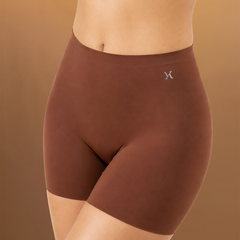
A small rotation of seven to ten pairs in cotton, covering everyday wear and a couple of seamless options for fitted clothing or PE days, is enough for most teenagers without overcomplicating the drawer.
What to avoid: thongs and very minimal styles at early teen ages, heavily synthetic fabrics for everyday wear, and anything with tight elastic that digs into developing hips.
Having the Conversation
For many parents, the conversation around first bras and changing bodies feels harder than it needs to be. A few things that make it easier:
Lead with practical information rather than emotional weight. Treating innerwear shopping as a normal, logistical part of growing up, the same way you would approach buying school shoes, removes a lot of the awkwardness on both sides.
Let your daughter lead on preferences where possible. Whether she wants to come shopping, whether she has opinions on styles or colours, whether she wants to try things on or have you guess the size. Giving her agency over what goes on her body from the beginning builds a healthy relationship with the whole topic.
Do not project urgency in either direction. Some girls want a bra before they technically need one because peers have them. Some resist wearing one past the point where it would be comfortable. Both are normal responses to an unfamiliar transition, and neither needs to be corrected forcefully. Practical information delivered calmly tends to land better than rules.
Check in periodically rather than treating it as a one-time conversation. Bodies change, comfort levels change, and what felt fine six months ago may not feel fine now. A low-key check-in every few months keeps the lines of communication open without making it a bigger deal than it needs to be.
FAQs
At what age should a girl start wearing a bra?
There is no fixed age. The right time is when breast development has begun enough that a girl feels more comfortable with some coverage, or when she asks for one, whichever comes first. For most girls this falls somewhere between ten and thirteen, but starting earlier or later than this range is entirely normal.
Should a teenager's first bra have underwire?
No. Underwire is designed for developed breasts and serves no purpose at early stages of development. A soft crop top, training bra, or seamless bralette is the right starting point and remains the most comfortable option through much of the teenage development period.
How do I know when my daughter needs a bigger size?
Signs that a bra has been outgrown: cups that are visibly full or overflowing,straps that dig despite being at their loosest setting, or your daughter mentioning that her bra feels uncomfortable. Remeasuring every six to twelve months through active development years catches size changes before they become uncomfortable.
Is cotton the best fabric for teenage innerwear?
For most teenagers, yes. Cotton is breathable, soft against sensitive skin, easy to wash, and comfortable through long active days. Seamless polyamide blends are a good second option for fitted clothing and PE days where cotton may show through or feel too thick.
How many bras does a teenager actually need?
Three to five is a practical number during active development years. Enough to rotate without any single bra wearing out too quickly, and few enough that the rotation stays current as sizing changes. More than five tends to mean some bras are being outgrown before they are worn out.
What if my daughter is embarrassed about bra shopping?
Completely normal. Letting her choose whether to come in person or have you buy a few options to try at home removes the pressure of the public fitting room. Starting with soft bralettes or crop tops that do not require precise sizing also makes the first purchase lower stakes and easier to get right without a formal fitting.